

Why I Write
Can Joan Didion help me answer this question?

Of course I stole the title from Joan Didion, who stole it from George Orwell. One reason I stole it was I didn’t have anything better to write. Normally, I would let another week slide by without publishing. I have no problem doing that. But the holiday festivities are in full swing, and I know the closer I get to Christmas, the harder it will be to make time to write. However, I also stole it because lately it’s a question I’ve been asking myself: Why do I write?
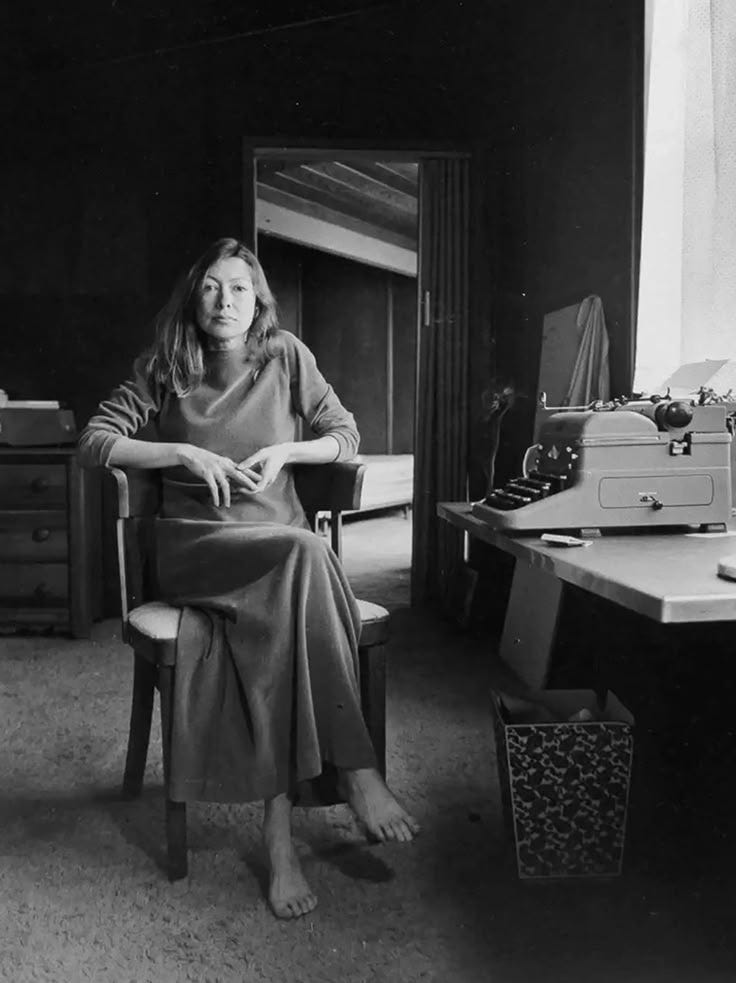
Like Didion, I don’t consider myself an expert in anything. I’m not a scholar, and I wouldn’t dare call myself an intellectual. Until recently, I wouldn’t even call myself a writer. I’m simply interested in things, and the way I learn about and develop those interests is through writing. So, in that case—yes, I’m a writer. The issue is, and I think this is true for most writers, my writing routine is 80% “thinking” and 20% writing. And my thoughts cannot be trusted, at least not without ample time for my weird little ideas to synthesize into something clear, coherent, and hopefully, entertaining. This maddening, meandering process is frustratingly long, much longer than the two-week publishing cadence I try to maintain. I sometimes spend months trying to give shape to my thoughts, only to find in the end, the idea doesn’t hold, which usually means I need more time to think.
While the title is the same as Didion’s, my process is slightly different, even though, essentially, I believe we’re saying the same thing. If you’ve read her piece1 (if not, you should), you’ll notice she doesn’t consider herself an abstract thinker. Instead, she describes herself as a person who pays attention to specifics, to the tangible. She writes:
“I would try to contemplate the Hegelian dialectic and would find myself concentrating instead on a flowering pear tree outside my window and the particular way the petals fell on my floor. I would try to read linguistic theory and would find myself wondering instead if the lights were on in the bevatron up the hill. When I say that I was wondering if the lights were on in the bevatron you might immediately suspect, if you deal in ideas at all, that I was registering the bevatron as a political symbol, thinking in shorthand about the military-industrial complex and its role in the university community, but you would be wrong. I was only wondering if the lights were on in the bevatron, and how they looked. A physical fact.”
For Didion, thinking was a consequence of writing, not the other way around. Later in the essay, she writes one of her most quoted lines:
“I write entirely to find out what I’m thinking, what I’m looking at, what I see and what it means. What I want and what I fear.”
This is true for me, too. The thoughts I have before I put words to paper make little sense, they’re more like, as Didion describes, mental images that “shimmer around the edges.” They’re flashes, fragmented and ephemeral, looking for something to latch onto.
I’ve written about this feeling before; it’s been the heart of my work for the past 20 years, and perhaps my entire life. I call these shimmering images, “flashes of delight,” and I’ve learned that most writers and artists recognize this phenomenon, they just call it by a different name. Virginia Woolf called them “moments of being.” James Joyce called them “epiphanies.” They aren’t entirely the same, but they’re similar—a result of each writer’s individual experience and their attempt to define it.
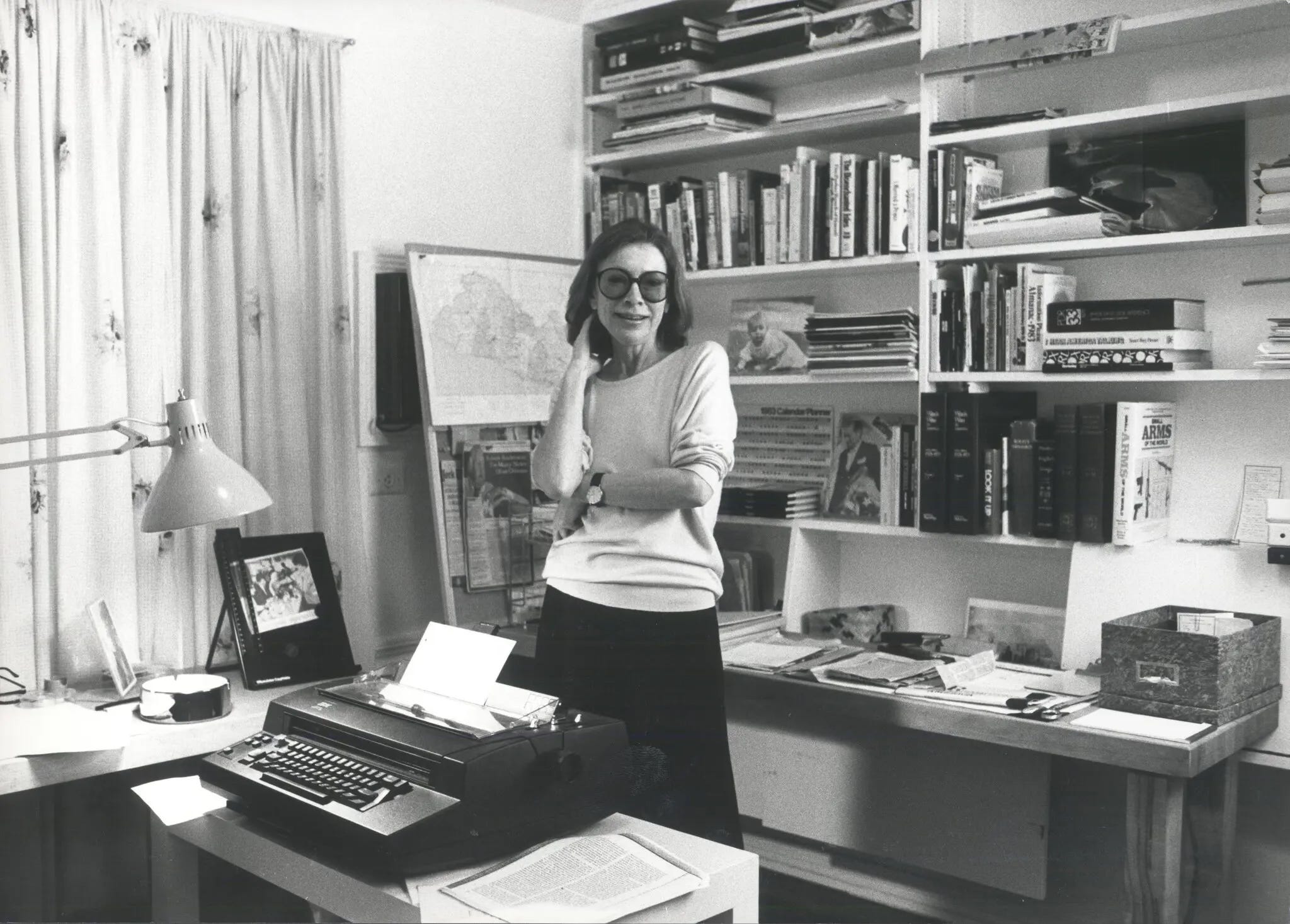
I’m constantly distracted by “flashes of delight,” which is one of the reasons why I’m such a slow writer, and at the same time, I need them. They’re how I process the beauty and strangeness of the world, and they expand my perception of what it means to be human. But it’s a delicate endeavor. You have to be good at catching these flashes, and then you must be gentle—hold them too tight and they turn to dust. For lack of a better word, I call this act “thinking,” but it’s different. Here’s how Didion explains it:
“…certain images do shimmer for me. Look hard enough, and you can’t miss the shimmer. It’s there. You can’t think too much about these pictures that shimmer. You just lie low and let them develop. You stay quiet. You don’t talk to many people and you keep your nervous system from shorting out and you try to locate the cat in the shimmer, the grammar in the picture.”
As exhausting as it can be, it’s also thrilling. The hard part is the actual writing. Like Didion said, you have to “find the grammar in the picture.” For the past two weeks, I’ve tried to understand what is going on in a few shimmering pictures in my mind by finding the grammar in them. I’ve jotted down sentences, rearranged words, shuffled ideas—none of it has taken shape yet, which is why I’m writing this instead. And unfortunately, I need an opening into my writing. I cannot write the middle or the end first. How would I even know the end? I need a strong first sentence to act as a portal for everything to enter. Once I have it, I can start arranging the picture into words. Didion writes:
“The arrangement of the words matters, and the arrangement you want can be found in the picture in your mind. The picture dictates the arrangement. The picture dictates whether this will be a sentence with or without clauses, a sentence that ends hard or a dying-fall sentence, long or short, active or passive. The picture tells you how to arrange the words and the arrangement of the words tells you, or tells me, what’s going on in the picture.”
I’m obsessed with rhythm and clarity, which is another reason why I’m so slow. I interrogate every sentence, and frustratingly, they can always be improved. This is where Substack is a problem. Sometimes, I think it’s the perfect place for me. It’s a diverse community of writers sharing their peculiar obsessions. How great! But other times, the performative pressures to write trendy, attention-grabbing essays and to publish frequently feels like the antithesis of why I write. I try to stay true to myself and my vision for Moonbow, but it can be disheartening. And it eats up most of my free time, time I could use to garden, exercise, see friends, live life!
One of my favorite writers, Zadie Smith, alluded to this in a recent interview with NPR:
“I just wish I was less selfish. Writing is a very selfish thing to have done with your time and it takes up all the time. I wish I had done a bit less of it or thought about what else I could have done in that time. Because it’s all I did, I just wrote and wrote and wrote and wrote and wrote and wrote and wrote. Which is great, but there are a lot of other things in life that you can do apart from that…Once I realized it, I took steps to do other things now. I’m out in my community. I’m volunteering. I’m engaged. And it feels so much better than sitting at a desk just writing.”
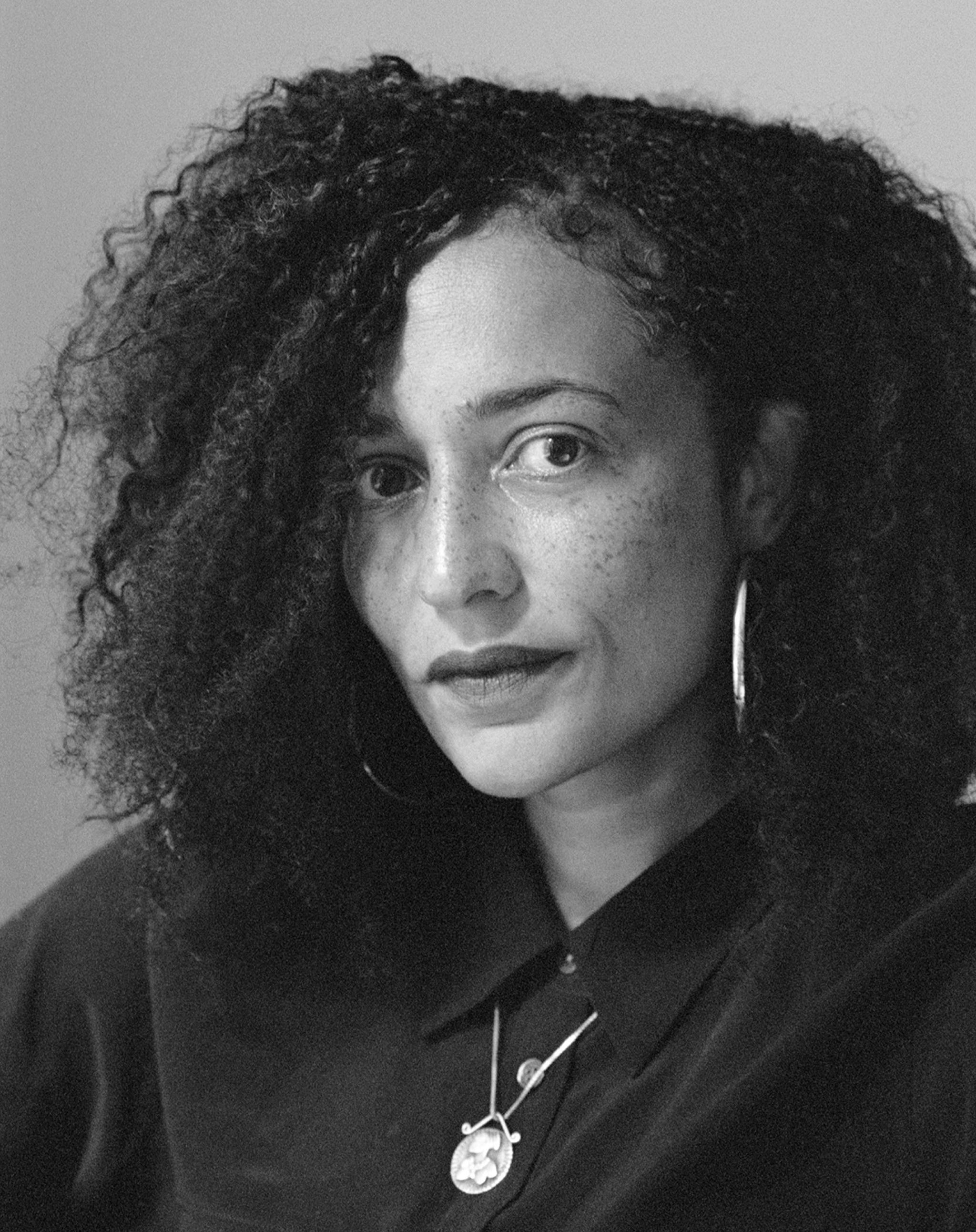
Hearing Smith say this was alarming. It also seems a little unfair. She’s very successful, with popular and critical acclaim, and it’s likely she has financial security; she can afford to do things away from her desk. Still, I can’t help but wonder if I’ll regret all this time I spent writing.
Alarm aside, I appreciate her saying this. Not enough writers do. They’re always saying how they can’t live without writing, how a life without writing isn’t really living, no matter the cost. That doesn’t ring true for me. Writing, as rewarding as it can be, is still a sacrifice. One that should be carefully considered.
So then, why do I write? The truth is, I don’t really know. I guess I want to see what’s possible—in art, in life—and writing is how I discover those things. If I knew how to do it another way, I would. Maybe one day I will. For now, I’m happy to be here, searching and struggling to find the answer to that question.
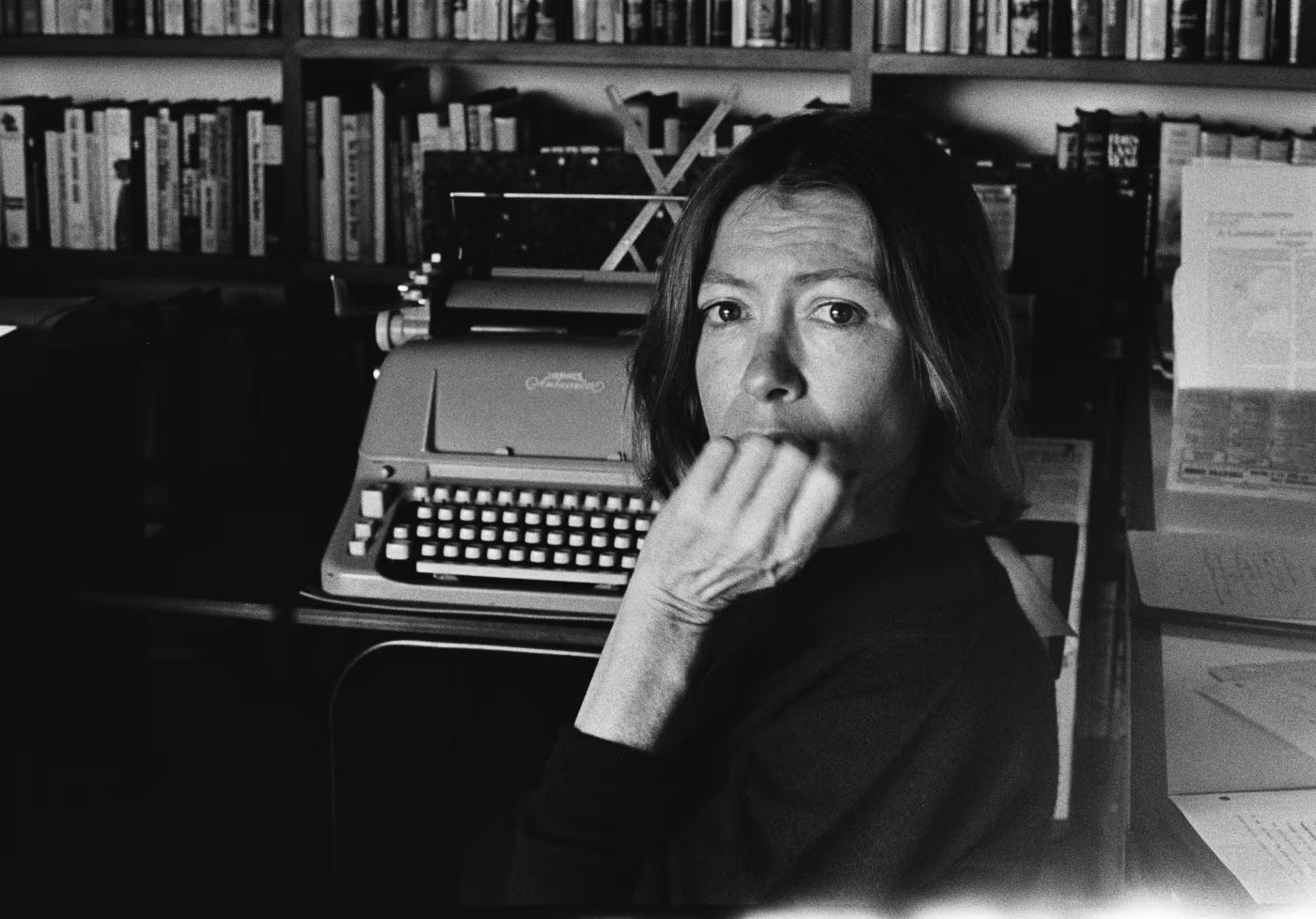
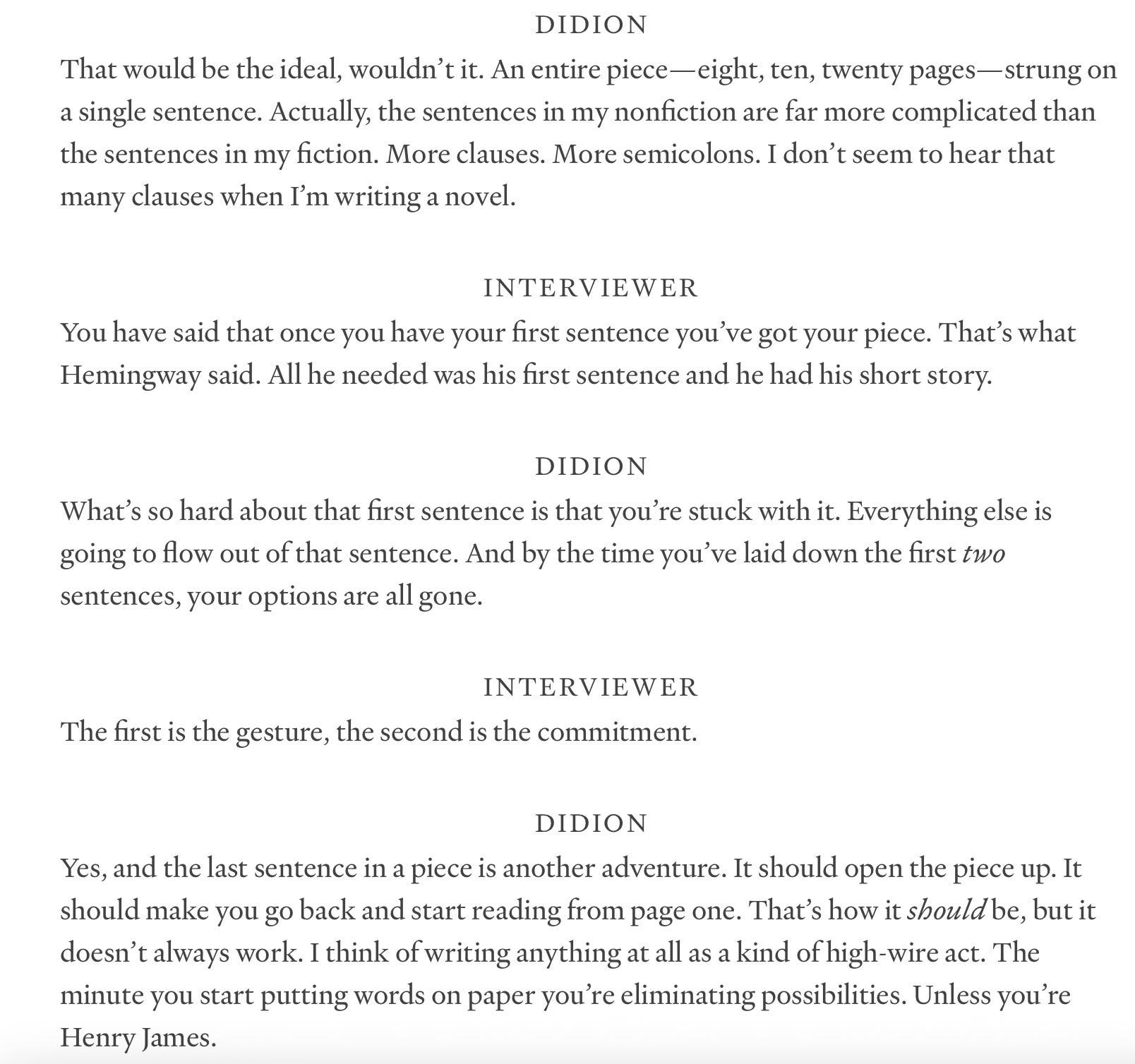
After I finished writing this, I reread Joan Didion’s 1978 “The Art of Fiction” interview for The Paris Review. She talks about the importance of the first sentence, that once you have it you’ve got your piece. I don’t remember reading that before, but it’s certainly true in my experience. And she’s also right that once you’ve laid down two sentences, your options are all gone. Writing is a cruel and beautiful thing.
MORE MOONBOW


If you enjoy reading Moonbow and want to support my work:
Upgrade to a paid subscription
Share Moonbow with someone who might enjoy it too
Give this post a like or leave a comment
Read the archive
Follow me on Instagram
And if you’d like to work together, you can email me at: taylor.sterling@taylor-sterling.com
Thank you!
From a lecture she gave at the University of California, Berkeley in 1976.
Thanks for sharing, Taylor! I keep returning to Moonbow because I always enjoy your thoughts (they're so interesting and could be about anything, really!) *AND* I appreciate your artful approach to writing.
Writing, for me, is an act of "unearthing." It helps me get to know the world in a new, different way. I haven't found another tool or creative practice that's come close to even matching it. But sometimes I hope I do because I'm a snail-paced writer! 🐌 I rewrite over and over till a sentence feels/looks right. Numbers aren't important to me, but I do get bummed when I spend weeks (months?) on a piece that I think could be encouraging and then it falls flat. My posts that aren't essay-ish or long form are the ones that always "perform" better on Substack, but they aren't as satisfying to create! Curious if you can relate to that conundrum?!
You might really enjoy reading this Linda Carroll, published here on substack today, titled "Are we finding ourselves or revealing ourselves through our writing?" : https://open.substack.com/pub/lindac/p/are-we-finding-ourselves-or-revealing?r=4ivi1&utm_campaign=post&utm_medium=web&showWelcomeOnShare=false ... :)